
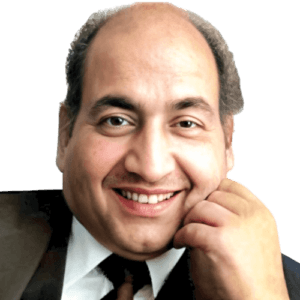
 On 31 July 1980, India lost one of its greatest musical treasures. Forty-six years later, the voice of Mohammed Rafi continues to echo across homes, concert halls, radio stations, streaming platforms and digital archives around the world. Technology has transformed the way we listen to music, but one truth has remained unchanged: few voices have stood the test of time as gracefully as his.
It is for this reason that millions of admirers believe the time has come for India to confer the Bharat Ratna, the nation’s highest civilian honour, upon Mohammed Rafi posthumously. This is not merely a demand for an award. It is an appeal to recognise a man whose voice became one of India’s greatest cultural identities.
On 23 June 2025, RafiFanClub.com submitted a representation to the Hon’ble Prime Minister of India on behalf of countless admirers worldwide. The appeal contained two respectful requests: first, that Mohammed Rafi be awarded the Bharat Ratna posthumously; and second, that 24 December, his birth anniversary, be declared National Music Heritage Day. The proposal was founded not on emotion alone, but on history, achievement, cultural influence and enduring public affection.
The following seven reasons explain why this honour would be a fitting recognition of an artist whose contribution extends far beyond playback singing.
1. A Musical Legacy Without Parallel
Few singers in the history of Indian cinema have demonstrated the range and versatility that Mohammed Rafi achieved. During a career spanning more than three decades, he recorded thousands of songs across numerous Indian and international languages. His repertoire included romantic melodies, classical compositions, devotional bhajans, patriotic songs, qawwalis, ghazals, comedy numbers and folk-inspired music, each delivered with remarkable ease.
What made Rafi extraordinary was not simply the number of songs he recorded, but his ability to transform his voice according to the character on screen. Whether singing for Dilip Kumar’s restrained intensity, Dev Anand’s effortless charm, Shammi Kapoor’s infectious energy, Rajendra Kumar’s romance or Johnny Walker’s comic brilliance, he never sounded repetitive. Each performance felt as though the voice belonged naturally to the actor himself.
Modern recording technology allows voices to be digitally altered, corrected and enhanced. Mohammed Rafi achieved similar transformations through sheer artistry. His flawless diction, impeccable breath control, emotional intelligence and deep understanding of character made every performance unique. His recordings continue to be studied because they represent not merely technical perfection, but the highest expression of musical storytelling.
2. A Global Ambassador of Indian Culture
Long before the phrase “soft power” entered public discourse, Mohammed Rafi was carrying Indian culture across the world through his music.
Today his songs are heard in almost every corner of the globe. Visitors to RafiFanClub.com come from more than two hundred countries and territories, demonstrating the extraordinary international reach of his legacy. Listeners in North America, Europe, the Middle East, Africa, Southeast Asia and Australia continue to discover his recordings decades after they were first released.
Even more remarkable is the diversity of his audience. His admirers belong to different religions, cultures and languages, yet they respond to the same emotions conveyed through his voice. Love, devotion, longing, hope and compassion require no translation.
Recognising this global appeal, RafiFanClub.com has worked to make his legacy accessible beyond Hindi-speaking audiences by publishing translations and analyses in multiple languages. This allows readers from countries as diverse as Brazil, France, China, Russia and the Arab world to appreciate not only the melodies, but also the poetry and emotions that made his songs timeless.
In an age when nations invest heavily in cultural diplomacy, Mohammed Rafi has continued to promote India’s artistic heritage without campaigns, publicity or official institutions. His music has quietly become one of India’s most enduring cultural ambassadors.
3. A Standard of Musical Excellence
Popularity alone does not create greatness. Enduring greatness is built upon mastery.
Mohammed Rafi possessed a rare combination of technical brilliance and emotional sincerity. His command over pitch, breath, pronunciation, dynamics and expression enabled him to sing compositions ranging from delicate romantic whispers to demanding classical masterpieces.
Songs such as O Duniya Ke Rakhwale demonstrated astonishing vocal power, while Suhani Raat Dhal Chuki revealed extraordinary restraint and emotional depth. In devotional songs, patriotic anthems and ghazals alike, he displayed complete control over every note without allowing technique to overshadow feeling.
One of his greatest strengths was his ability to communicate emotion through the smallest vocal details. A gentle murki, a carefully sustained note, a measured pause or a subtle change in tone could alter the emotional meaning of an entire phrase. He never sang merely to impress; he sang to communicate.
For students of music, his recordings remain invaluable lessons in breath management, diction, phrasing and emotional interpretation. They continue to inspire singers across generations because they demonstrate that true artistry lies not in vocal display, but in serving the emotion of the composition.
These qualities alone would secure Mohammed Rafi a permanent place in India’s cultural history. Yet his greatness extended well beyond music itself.
4. A Legacy Built on Humanity
Great artists are remembered for their work. Exceptional artists are remembered equally for their character.
Mohammed Rafi was admired not only because he possessed an extraordinary voice, but because he lived with extraordinary humility. Throughout his career, numerous stories emerged of his quiet generosity. He was known to reduce or even waive his fee for struggling music directors, assist fellow artists in financial distress, and support technicians working behind the scenes without seeking publicity or recognition.
What distinguished these acts was their sincerity. They were rarely announced, photographed or promoted. Those who benefited often revealed them years later, long after the events had taken place.
His humility was equally remarkable. Despite unmatched success, he remained approachable, soft-spoken and deeply respectful towards colleagues, whether they were legendary composers or newcomers entering the industry. Fame never diminished his simplicity.
The Bharat Ratna recognises not only exceptional achievement but also individuals whose lives reflect the highest values of the nation. In Mohammed Rafi, musical excellence and human excellence existed together.
5. A Voice That Time Could Not Silence
Very few artists remain culturally relevant decades after their passing. Mohammed Rafi is one of those rare exceptions.
His songs continue to attract millions of listeners across radio, television, streaming platforms and social media. Younger audiences, many born decades after his passing, continue to discover his recordings through digital playlists, remastered albums and film retrospectives. Every generation seems to find its own favourites while appreciating the timeless quality of his voice.
The reason is simple. Technology evolves, recording formats change and musical trends come and go, but genuine emotion never becomes outdated. Artificial intelligence can imitate style and software can perfect pitch, but neither can recreate the honesty, compassion and emotional truth that define Mohammed Rafi’s singing.
His voice continues to comfort, inspire and unite listeners because it speaks directly to the human heart.
6. An Important Chapter Still Waiting to Be Written
India has rightly honoured many legendary musicians with the Bharat Ratna. These awards celebrate individuals whose work shaped the nation’s cultural identity.
Yet the absence of Mohammed Rafi from that distinguished list continues to surprise music lovers across generations.
For more than three decades, from the 1940s to 1980, his voice accompanied India’s joys, sorrows, celebrations, prayers and aspirations. His songs became part of weddings, festivals, patriotic occasions, devotional gatherings and everyday life. Few artists have contributed so consistently to India’s collective emotional memory.
Awarding him the Bharat Ratna today would not rewrite history; it would complete it.
Such recognition would acknowledge not only one extraordinary singer but also an era in which Indian film music became one of the country’s greatest cultural exports.
7. Mohammed Rafi Represented the Spirit of India
Perhaps the strongest argument for the Bharat Ratna lies beyond statistics and awards.
Mohammed Rafi represented an India that celebrated harmony above division.
Born into a Muslim family, he sang some of the most beloved Hindu devotional songs ever recorded. He rendered bhajans, naats, patriotic songs, qawwalis and philosophical compositions with equal sincerity because, for him, music transcended religious identity.
His voice carried devotion without boundaries. Whether singing “Man Tadpat Hari Darshan Ko Aaj,” “Allah Tero Naam,” romantic melodies or patriotic anthems, listeners connected not with his religion but with his humanity.
In today’s world, where differences often receive greater attention than common values, Mohammed Rafi reminds us that music has the power to unite people more effectively than ideology ever can.
His life demonstrated that India’s greatest strength lies in its diversity, compassion and shared cultural heritage.
The Role of RafiFanClub.com
Preserving a legacy requires more than admiration; it requires sustained effort.
Since its launch, RafiFanClub.com has worked to document Mohammed Rafi’s extraordinary contribution through carefully researched articles, song analyses, translations and archival material. Readers from over 200 countries and territories have visited the website, reflecting the truly global reach of his legacy.
By making his songs understandable across languages and cultures, the initiative seeks to ensure that future generations appreciate not only his melodies but also the poetry, philosophy and emotions embedded within them.
This work represents cultural preservation in its truest sense, keeping alive one of India’s greatest artistic treasures for audiences around the world.
A Recognition Long Overdue
The Bharat Ratna is more than India’s highest civilian honour. It is a statement about the values the nation chooses to celebrate.
Honouring Mohammed Rafi would recognise a musician whose artistry crossed every boundary of language, religion, region and generation. It would acknowledge a humanitarian whose humility matched his genius. It would reaffirm India’s commitment to preserving its richest cultural traditions.
Similarly, declaring 24 December as National Music Heritage Day would create an enduring tribute that inspires young musicians while reminding future generations of the timeless standards of excellence, discipline and humanity that Mohammed Rafi embodied.
Whether or not these honours are ultimately conferred, one truth remains beyond debate.
For millions across the world, Mohammed Rafi has already earned a place that no formal recognition can either grant or diminish. His songs continue to comfort the lonely, inspire aspiring singers, preserve India’s musical heritage and connect people across cultures through the universal language of melody.
Yet nations are remembered not only for the heroes they produce, but also for the heroes they choose to honour.
If the Bharat Ratna represents the very best of India, then few names reflect its ideals more completely than Mohammed Rafi. His voice belonged to every Indian. His legacy now belongs to the world.
~ Balwant S. Wadhwani